
Four Canadian Women Who Changed Oil and Gas
Celebrating Women’s History Month in Canada this October.
Women Who Changed the Industry by Looking Closer
A few grains of limestone helped point Shell toward a gas field. Ruth Reed was the geologist who noticed them. Earlier examinations had missed them. [1] It is a detail worth remembering when we talk about Canadian women in oil and gas. Behind a major discovery, there can be years of careful work and someone willing to question the accepted explanation.
October is Women’s History Month in Canada. [2] At Progress Land, we are taking a closer look at four women whose expertise helped shape the industry: Patricia “Pat” Lee, Ruth Reed, Dr. Diana Loranger and Dr. Helen Belyea. Their stories are a reminder to pay attention to the people who ask another question when everyone else is ready to move on.
Pat Lee saw a different possibility at Caroline
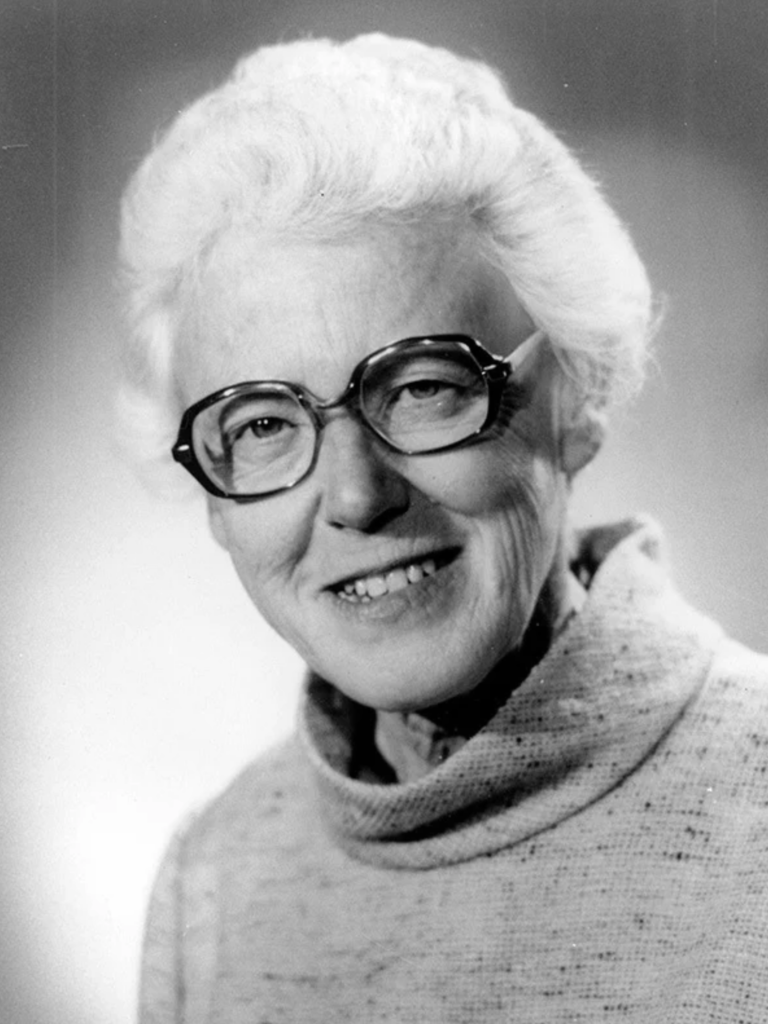
At Shell Canada, Patricia “Pat” Lee worked across geology and geophysics, bringing both disciplines to her interpretation of seismic data near Caroline, Alberta.
More experienced colleagues considered the area unlikely to hold significant petroleum reserves. Lee saw evidence worth investigating. Her interpretation pointed to a narrow formation that could contain a substantial gas deposit.
Shell carried out further seismic testing and began an exploratory well in December 1985. On February 13, 1986, it reached a gas bearing reef where Lee had predicted. A second well confirmed another substantial find, and Shell acquired drilling rights across much of the reserve. [3]
The Caroline discovery began with a different reading of the evidence. Lee gave the company a reason to investigate an opportunity it could otherwise have passed over.

Portrait source recorded as Canadian Society of Petroleum Geologists, “Stanley E. Slipper Award: Patricia J. Lee,” Bulletin of Canadian Petroleum Geology, December 2005, vol. 53, no. 4. Photographer unconfirmed.
Ruth Reed found the clue in the core
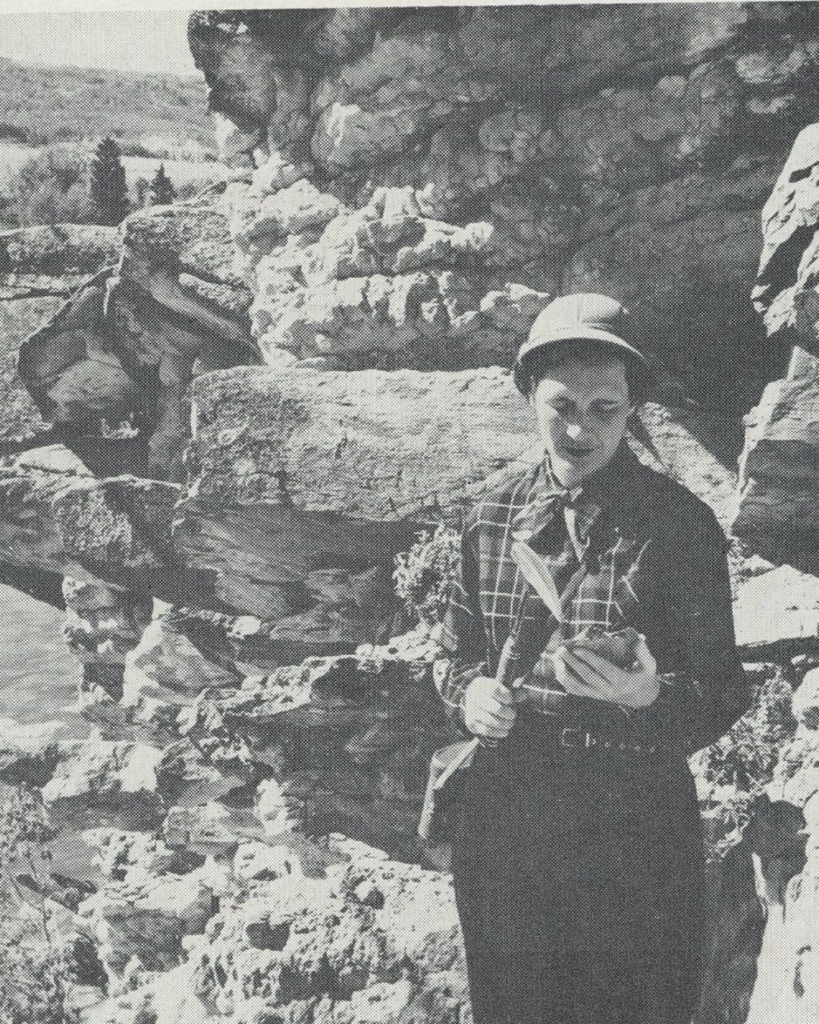
Courtesy of Shell Historical Heritage & Archive, The Hague; Shell News Canada, April 1958, via APEGA.
At Shell, Ruth Reed found something earlier examinations of core samples had missed: limestone grains.
APEGA’s history connects that observation to the 1957 Waterton sour gas discovery. Shell tested her interpretation by drilling, despite scepticism from other geologists. The Waterton Gas Plant followed in 1962. [1]
Her story makes “attention to detail” feel considerably less like a line on a résumé.
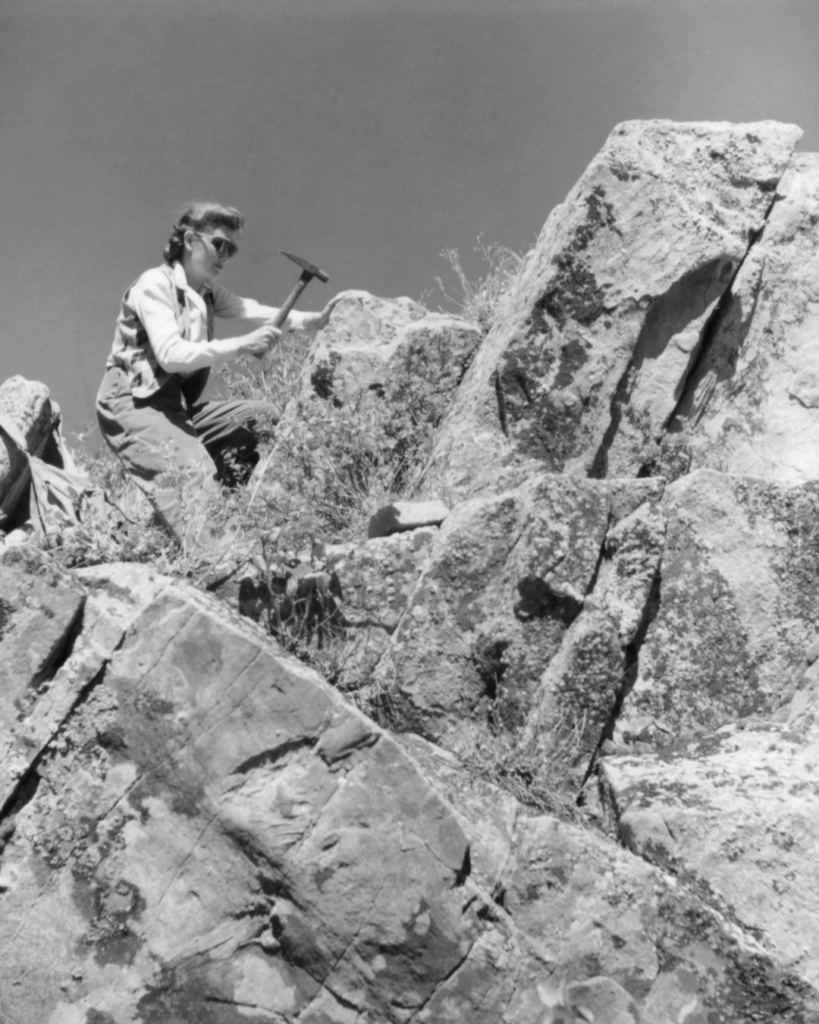
Glenbow Archives, IP-14a-1828, via APEGA. Photograph published with a 1947 Imperial Oil Review article.
Diana Loranger made tiny fossils useful to exploration
Diana Loranger joined Imperial Oil’s field geology team in 1943. She went on to establish its micropaleontology laboratory in Calgary, where microscopic fossils became a practical tool for exploration. APEGA describes how Loranger used those fossils to establish the ages of sedimentary layers. Her findings informed Imperial’s search for oil in the late 1940s. [1] A fossil that small can be easy to overlook. Understanding what it tells you takes expertise. Loranger helped make those observations useful to decisions made far beyond the laboratory.
Helen Belyea helped put the geology in context
Dr. Helen Belyea’s work with the Geological Survey of Canada helped explain the Devonian reef formations beneath Alberta. She examined core samples and studied exposed rock formations, building an understanding of ancient environments and where oil deposits might occur. Her mapping helped other geologists interpret a much larger geological picture. Glenbow also records her role in mentoring other women in the petroleum industry. [4] Mapping gives an observation somewhere to belong. A sample becomes more useful when another professional can understand its location, its significance and its relationship to the surrounding rock. Belyea helped build knowledge that other people could use and carry forward.
Courtesy of Natural Resources Canada, photograph KGS-2369T

Looking closer still matters to land teams
These women worked in geoscience. For today’s land teams, their stories bring a familiar professional habit into focus: examine the information carefully before making the next decision.
A construction date can be firm while an access condition remains unresolved. A commitment can be clear to the person who made it and difficult for the next person to find.
In oil and gas land administration, keeping agreements current and recording outstanding commitments helps the next person understand what still needs attention. Good land records management preserves the context behind a decision as a file moves between people.
That means checking the supporting record, following up when information is incomplete and making responsibility clear before the next milestone.
At Progress Land, early risk identification and clear project information are part of our approach to land consulting services. [5]
For us, Fewer Project Surprises means asking the question early enough for the answer to help.
Remember the women behind the work
This Women’s History Month, we are recognizing Pat Lee, Ruth Reed, Diana Loranger and Helen Belyea for their specific contributions to Canadian oil and gas.
Learning what each woman actually did gives us a better story to pass on. It also gives newer professionals names to look up and work to learn from.
Their names belong alongside the discoveries.
Explore more Land Services Insights for Fewer Project Surprises.
Sources
Sources
- APEGA. Breaking New Ground Alberta’s First Women Geoscientists. https://discoverapega.ca/stories/breaking-new-ground-albertas-first-female-geoscientists/
- Women and Gender Equality Canada. Women’s History Month. https://www.canada.ca/en/women-gender-equality/commemorations-celebrations/womens-history-month.html
- Government of Alberta. Patricia Lee Geologist. https://history.alberta.ca/energyheritage/oil/the-quest-for-sustainability/women-in-the-oil-patch-1950s-to-2000/patricia-lee-geologist.aspx
- Glenbow Museum. Helen Belyea. https://www.glenbow.org/wp-content/uploads/2024/10/Belyea_Helen.pdf
- Progress Land Services. Land Consulting and Regulatory Services. https://www.progressland.com/